|
|
| home | exhibitions | interviews | features | profiles | webprojects | archive |
|
Ivor Innes and the Elfin Oak Rupert White
On the 26th July, 1930, The Western Morning News announced that a ‘curious elfin tree’ had been unveiled, that day, in Kensington Gardens. Apparently a very old pollarded oak had had numerous elves, fairies and wild animals carved into it by an artist called Ivor Innes. The article explains: He takes the shapes and forms already on his tree trunk then carves out what they suggest to him be it elf or owl or rabbit. The carvings are then coloured by a secret process of his own.
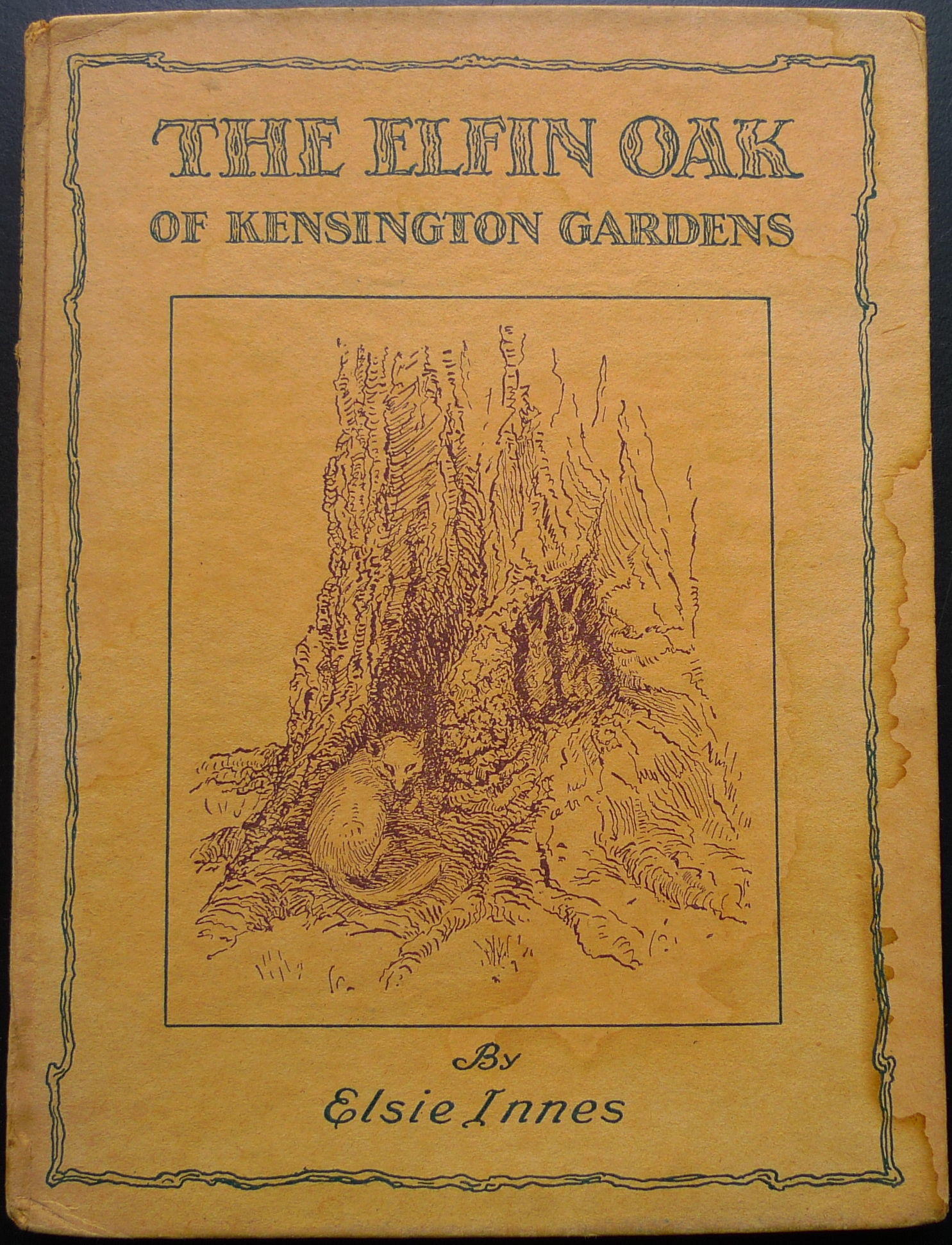
Published late in 1930, after the tree was unveiled.
The old tree had been found in Richmond Park by Innes himself, before being conveyed to Kensington. There it was given a canvas covering whilst he worked on it in secret over many months. The sculpture was commissioned by George Lansbury, a politician with responsibility for the Royal Parks, after receiving a proposal from the actress and writer Lady Winifred Fortescue. It seems Ivor Innes had previously created a similar sculpture for Fortescue in her own garden, having been inspired by the remains of a tree he had seen there. Later in 1930 a children’s book ‘The Elfin Oak of Kensington Gardens’ - now very scarce - was published, written by Ivor’s wife Elsie. It contains multiple illustrations by Ivor, and backstories for many of the Elfin Oak’s 74 characters. In subsequent years the Kensington Elfin Oak, which is still enjoyed now, was adopted by Spike Milligan, comedian and creator of the hugely influential ‘Goon Show’[i]. By the sixties it was in poor condition though, and, during 1965 and 1966 - at the height of his fame - Milligan took it upon himself to repair it, doing most of the work himself, by hand, at the weekends. Shortly after this, in 1969, the tree featured in the gatefold sleeve of Pink Floyd's 'Ummagumma' album. Then in the mid-90s Milligan organised someone else to do yet more repairs, this time obtaining funding from wealthy friends including Paul McCartney, Bill Wyman and Prince Charles. The tree received Grade 2 listing in 1997. The Elfin Oak therefore has a fascinating history, much of which is already well documented on the web (eg see https://www.royalparks.org.uk/read-watch-listen/elfin-oak). Ivor Innes the artist has, however, been completely forgotten. Although by the 1930s he already had a reputation for ‘griglans’, or small painted sculptures made from heather roots found in Cornwall, a quick Google search shows nothing other than his association with the tree in Kensington.
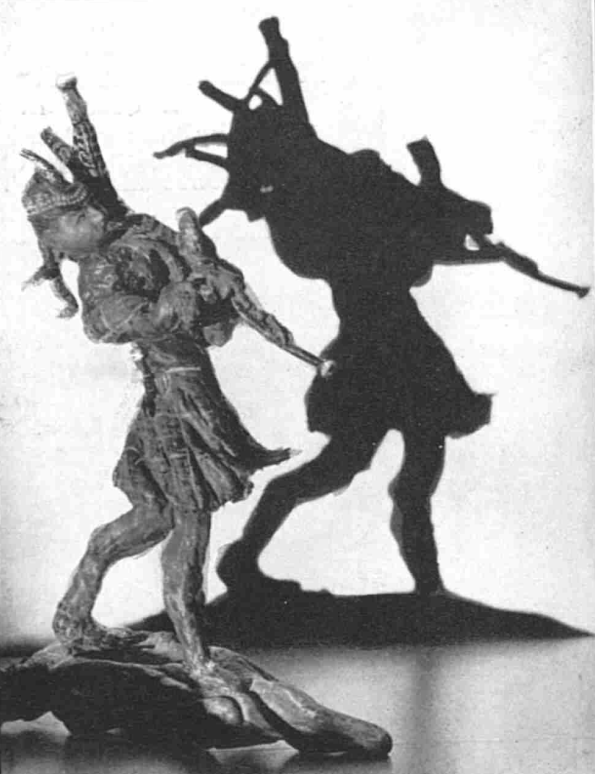
One of three ‘griglans’ in The Graphic 9th November 1929
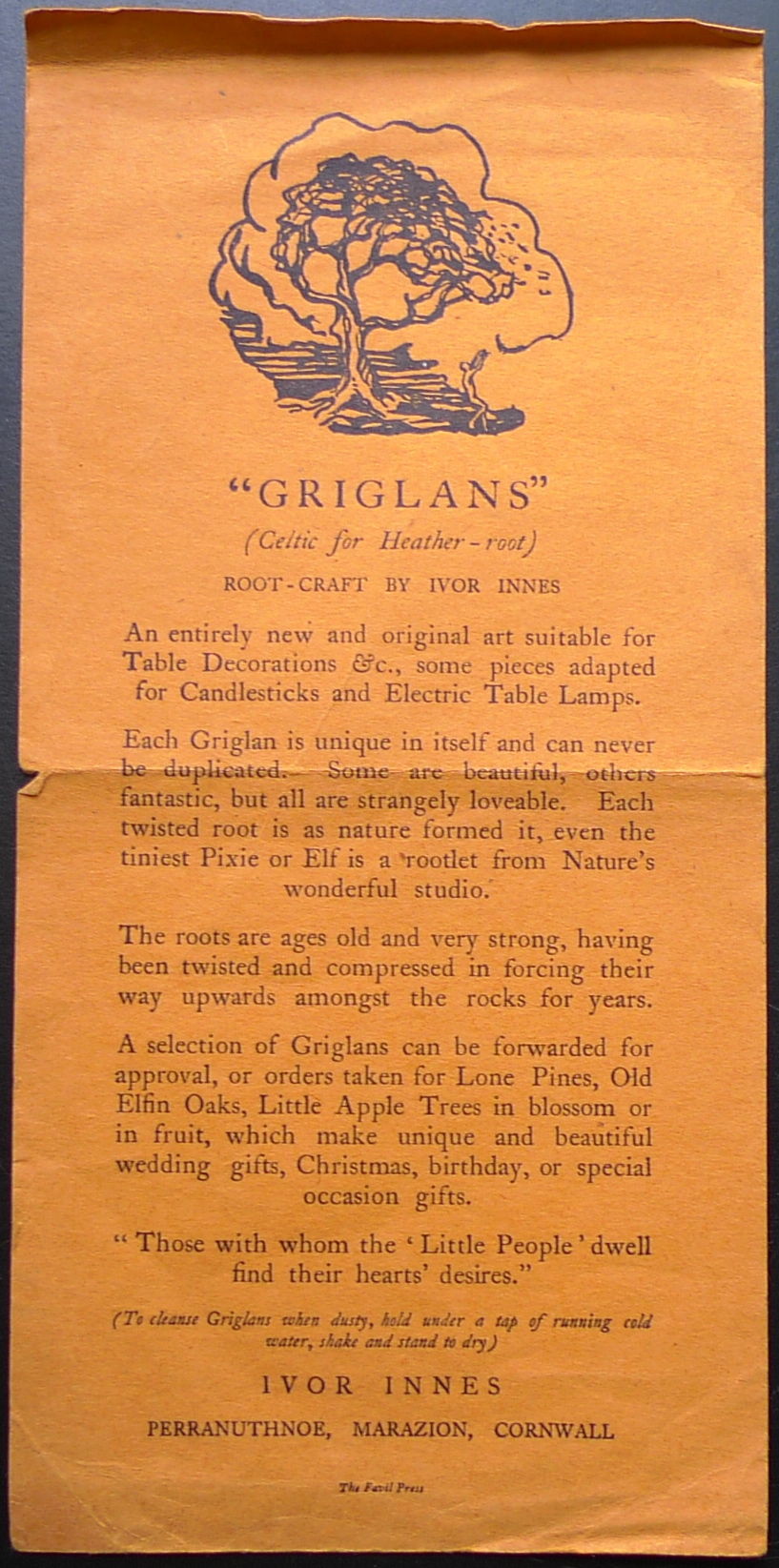
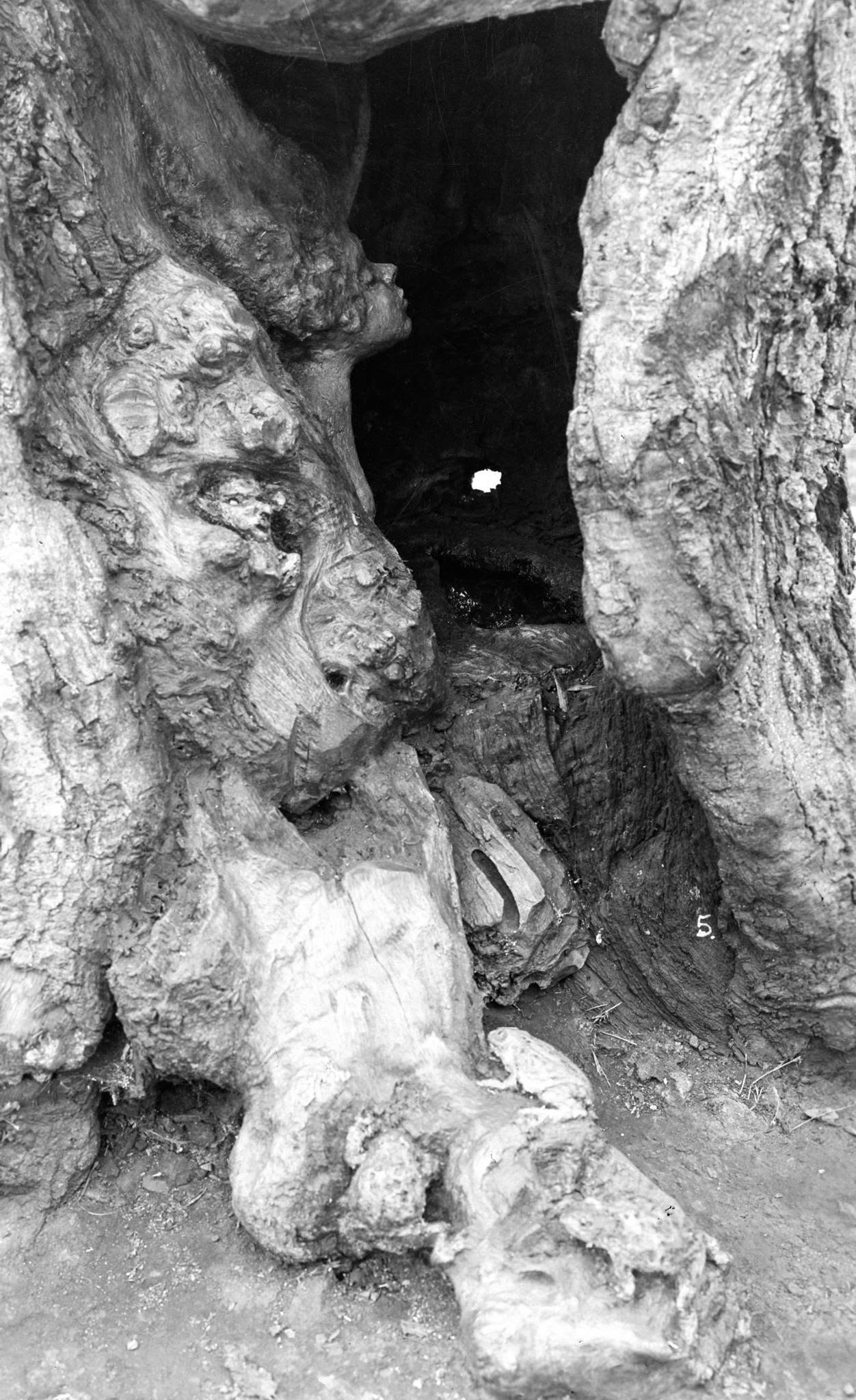
Born Francis I (for Ivor?) Innes in Scotland on December 13th 1880, his wife was called Elsie Caroline Innes[ii]. We know nothing about his early life, but his first appearance as an artist in the British newspapers, was in 1924 when he was 43. He was, it seems, exhibiting ‘griglans’ in Central Hall Westminster in the annual ‘Englishwoman Exhibition of Arts and Handicrafts’[iii]: Ivor Innes, the artist, gathers the heather from the Cornish hills and moors and paints them into fantastic figures. He has depicted with painted heather-roots a scene in the garden of Eden, complete with the serpent. A dainty mermaid nursing a baby on the bow of a tree is another of his subjects. Mrs Ivor Innes said: ‘we had the idea when we were camping out in the summer and my husband painted a figurehead to place outside the camp’.[iv] Another article notes that his studio, named Weal Janie, is situated somewhere in Cornwall. This fits with information on a flyer advertising ‘Griglans (Celtic for heather root)’ printed on yellow paper. It gives Ivor Innes’ address as Perranuthnoe, Marazion, Cornwall. Each year, for the next five years, Innes and his wife would exhibit at the ‘Englishwoman Exhibition’, and each year they received favourable publicity as a result, not least in 1929 when three images of his griglans appeared in the popular Graphic magazine. It seems likely that his commissions for the two London elfin oaks were also the result of this exposure in the capital. We can, with some confidence, say that Ivor and his wife lived in Cornwall during the 1920s, and quite possibly before this, but in 1931 he was commissioned to work on an oak tree in Offington Park, Worthing. It ended up in the modest but fantastical garden of Brough House in Rustington, Sussex whose owner, Thomas Ansdell, was a friend of Innes’.
The Elfin Oak at Brough House, Rustington
In the 1939 register, recorded on September 29th, he was living with Elsie at Little Down, Friston Hill, Hailsham, Sussex. It’s possible, though, they were only there temporarily: perhaps he was working on another commission. Certainly when Elsie died on New Years Day 1954 she was recorded as living at Paithe Pool, Perranuthnoe. (This is now a two-bedroom bungalow available to rent on Air B&B). A Francis Innes aged 74, ‘retired’ was recorded as leaving England for Canada later in 1954, suggesting this may have been where Ivor himself died. This emigration late in life might help explain why so little is known about him. However his master work - the Elfin Oak in Kensington - is rapidly now approaching its 100th birthday and is still celebrated and loved by many.
If family or friends know more about Ivor and Elsie’s early lives please get in touch [i] The Goon Show ran throughout the 1950s and was a big influence on The Beatles and Monty Python. It also starred Peter Sellers, Harry Secombe and Michael Bentine. [ii] This is taken from the 1939 register, where Francis Innes, then in Sussex, is noted to be the ‘griglan’ artist. [iii] Daily Express, 13th November 1924. [iv] A later interview indicates that this first ‘griglan’ was found by accident whilst painting ‘en plein air’ near the coast in Cornwall. 30.7.26 |
|
|